EVERGOODS ELEMENT Card Wallet Review
The EVERGOODS Element Card Wallet is durable, easily fits in your front pocket, and lets you carry only a few items, making it a solid minimalist option.
Our Verdict
Save time. Get access to brief summaries of our reviews so you can browse and make decisions more efficiently.
Pros
- The materials have proven durable
- The magnets are snappy and haven’t affected cards or an AirTag
- We have no issues with the seamless design
Cons
- It takes a while to break in, and it doesn’t break in much
- It’s small enough to lose easily
- You’re limited in how much you can stow inside
Technical Details
-
Weight (oz)
0.96 oz (27.2 g)
-
Dimensions
4.13 in x 2.67 in x 0.47 in (10.5 x 6.8 x 1.2 cm)
-
Notable Materials
Nylon, Thermoplastic Polyurethane (TPU), Polyurethane (PU)
-
Warranty Information
Full Review
Minimalist wallets live and die by execution. Strip things down too far, and you’re left with something annoying to use; add too much structure, and you lose the whole point. After two weeks of testing the EVERGOODS Element Card Wallet as a combination everyday carry and weekend trip companion, it’s clear that EVERGOODS is firmly aiming for the former: a refined, ultra-simple card wallet that prioritizes durability, consistency, and restraint over raw capacity.
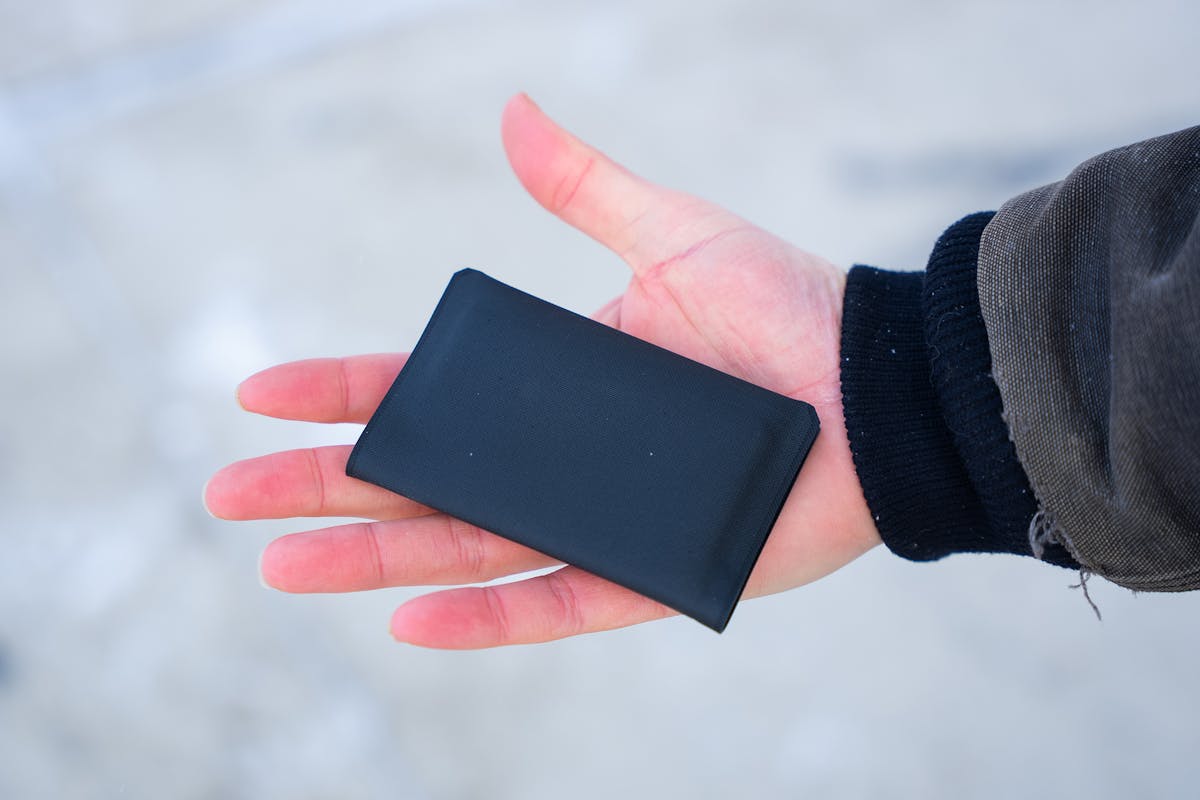
This isn’t a soft leather billfold meant to patina over time; it’s a technical, stitchless wallet designed to hold its shape, resist moisture, and survive years of daily abuse. It feels tough, slightly rough to the touch, and intentionally utilitarian. EVERGOODS markets the Element Card Wallet as optimized for 4–7 cards (more on that later), secured by a magnetic closure, with laser-cut and RF-welded construction. After daily front-pocket carry, stowing it in slings and tossing it into travel backpacks, we found it delivers precisely what it promises—no more and no less.
The Rundown
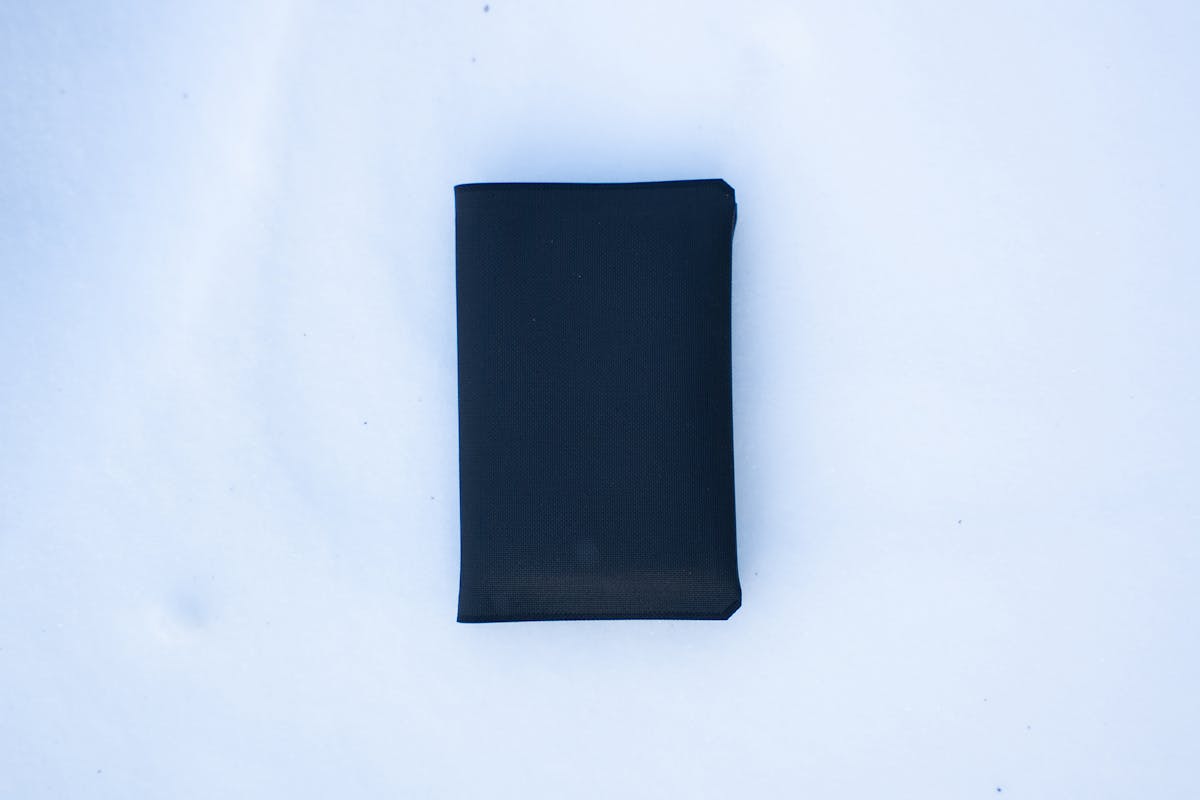
The Element Card Wallet uses laser-cut panels RF-welded together to achieve its stitchless construction. This eliminates seams and thread, reducing failure points and giving the wallet a very clean, almost industrial aesthetic. The solution-dyed 420D nylon 6 shell feels extremely durable and structured, aided by a TPU laminate on the back and a PU kiss-coat on the face. It’s waterproof, rugged, and clearly designed to outlast softer materials we see on other travel wallets.
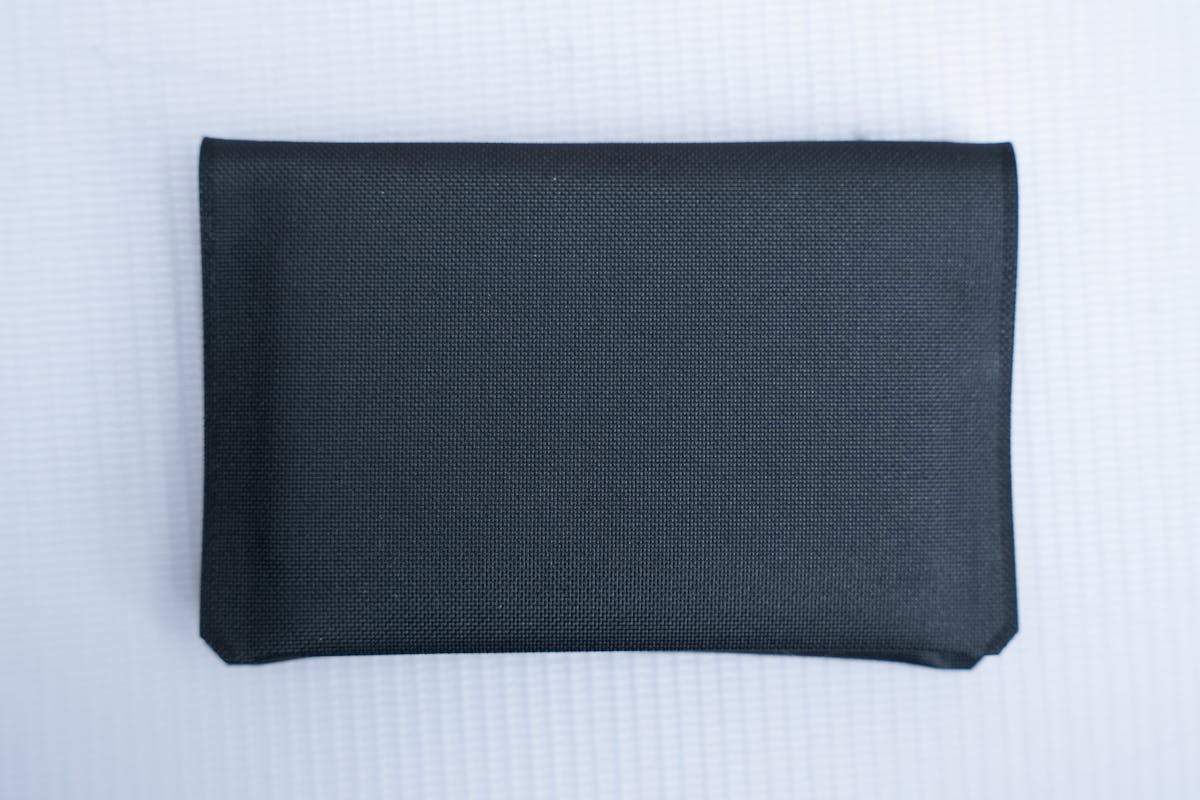
That durability comes with a tradeoff. The wallet isn’t soft or pliable out of the box, and it feels noticeably more rigid than leather or fabric billfolds. Over the two-week testing period, it did break in slightly, becoming more malleable without losing structure, but it never became soft. If you’re looking for something that molds dramatically to your cards, this isn’t for you.
The corners are cut, which helps prevent sharp edges from digging into your pocket or snagging fabric. It’s a small detail, but one that makes front-pocket carry noticeably more comfortable over long periods. If this weren’t the case, it might have poked a hole in more athletic-tailored pockets.
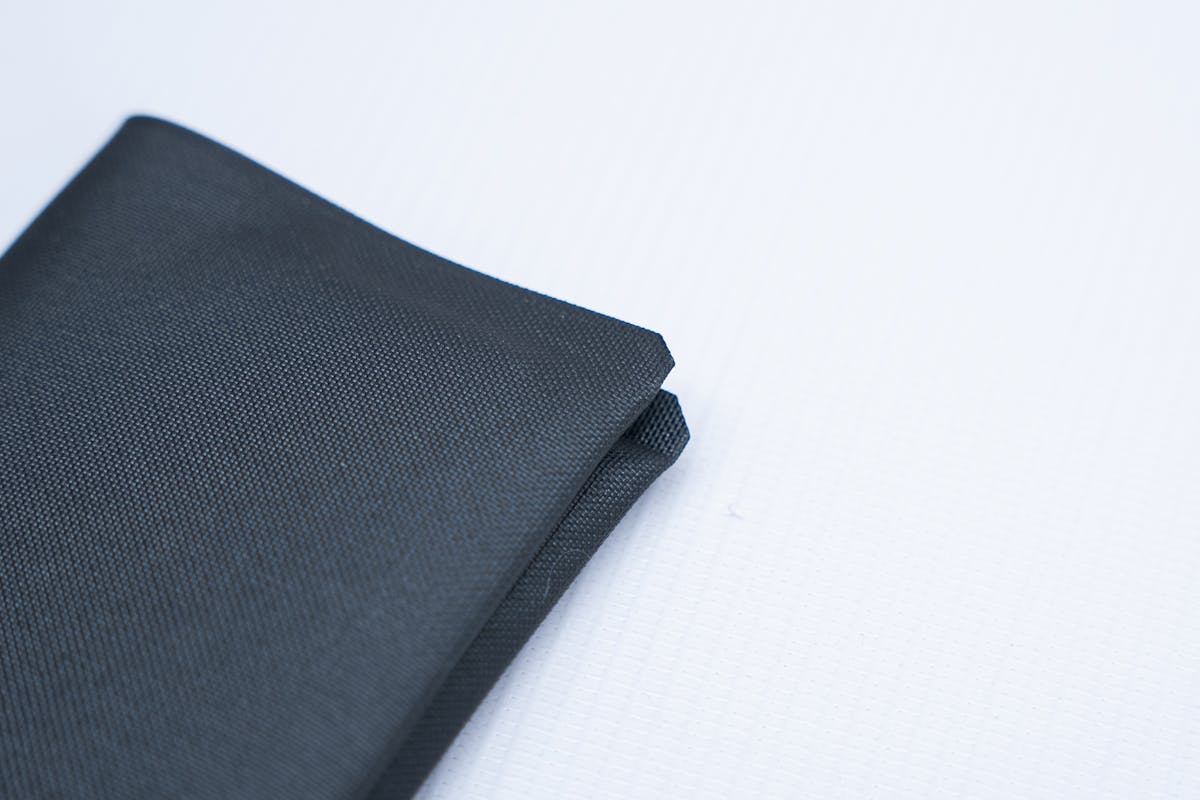
The magnetic closure uses cylindrical neodymium grade N52 magnets, and they’re snappy. The wallet stays closed during daily movement, sitting, and walking, yet opens easily when you need access. We experienced no issues with magnets affecting cards, keys, or an AirTag during testing.
Inside, the layout is intentionally minimal. All you’ll find are two quick-access card slots, each best suited for 1–2 cards (though you can push it to 3 at the cost of ease of access) and one central cargo pocket, which can hold 1–3 additional cards, folded cash, or small items like a spare key or AirTag. If you add items that are a bit too thick, it’s a little lumpy and hard to access. A flash drive works well, but feels like a waste of space. A flash drive and a Tile tracker fit, but it’s a bit wonky. If you can find something that works perfectly, run with it!
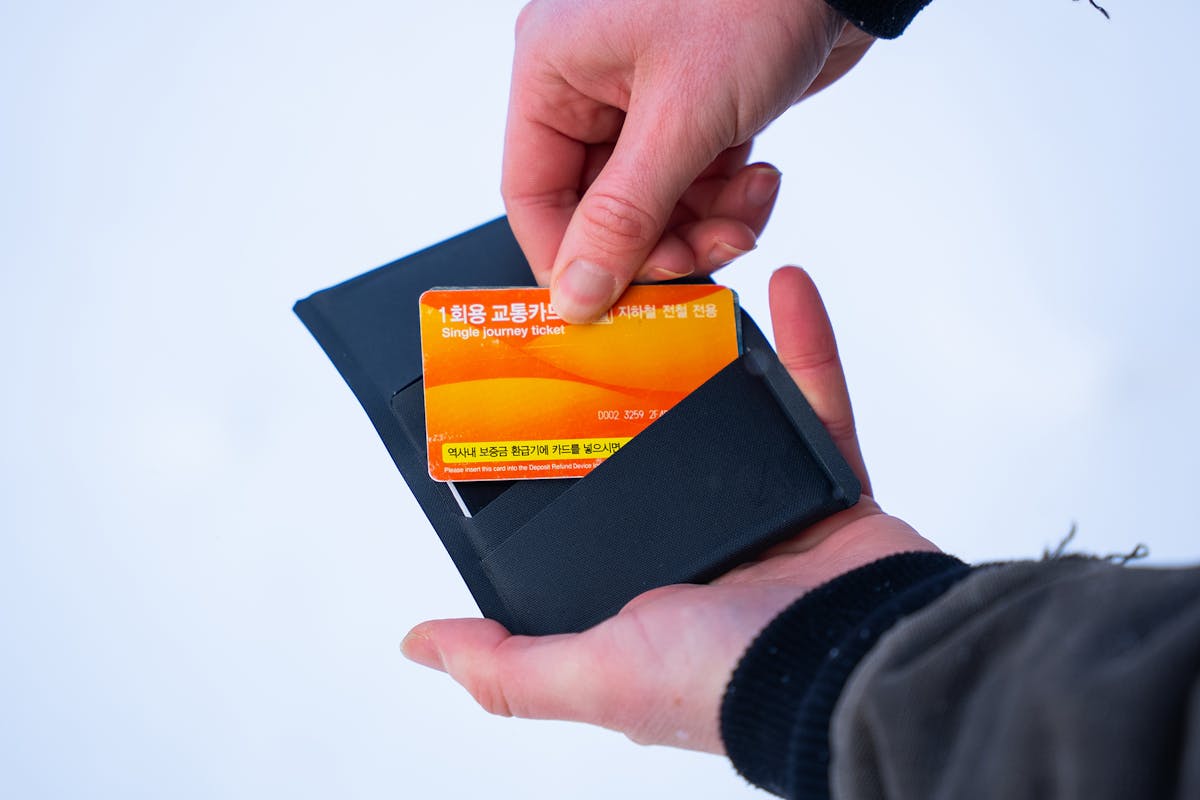
That’s it: no hidden pockets, no extra dividers, no clever tricks. In practice, that simplicity makes the wallet extremely easy to use. Cards slide in and out predictably, and the cargo pocket provides just enough flexibility for emergency cash or a small tracker without turning the wallet into a catch-all. This wallet feels like the materials you’d see from a brand like Pioneer, with the design you’d see in something much more minimalist.
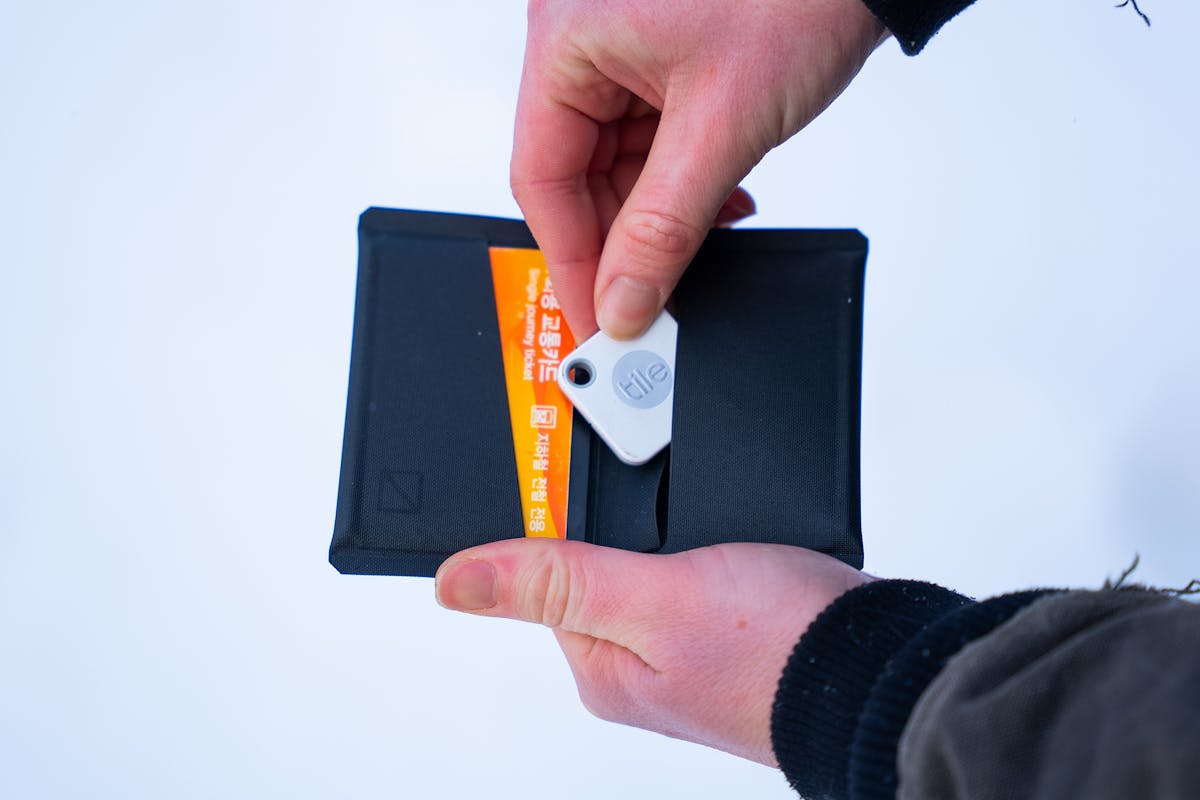
Significantly, the wallet physically limits how much you can carry. It won’t balloon or overstuff, even if you try, and it looks nearly the same when full as it does when empty. The only thing that kept it from closing was loading odd-shaped gear into the cargo pocket, so avoid that. For minimalists and self-aware overpackers, this is a solid design.
Packability
Packability is one of the Element Card Wallet’s strongest traits. With a footprint only slightly larger than a credit card and a maximum thickness of 0.47 inches (12 mm), it disappears into a front pocket. At just 0.96 ounces (27.2 grams), it’s light enough that you forget it’s there, at least when compared to metal minimalist wallets.
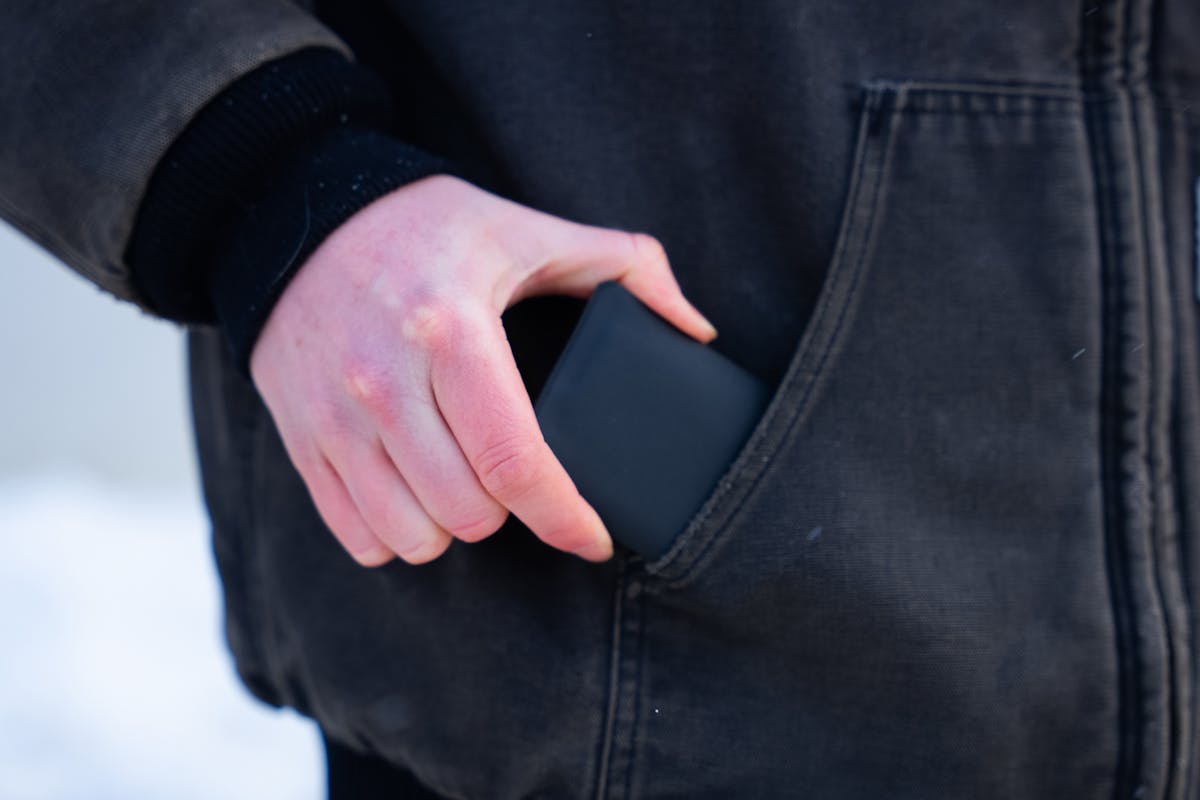
We carried it almost exclusively in a front pocket during testing, where it remained comfortable whether standing, sitting, or walking for long periods. It also fits easily inside slings and travel backpacks, taking up virtually no usable space.
That said, its small size cuts both ways. If you’re someone who frequently misplaces small items, this wallet is easy to lose. There’s no strap, no attachment point, and nothing about it demands attention once it’s out of your hands, not that we’d want it to. As mentioned, there’s space for a tracker inside, which is handy if you’re in the “I’m going to lose this” camp.
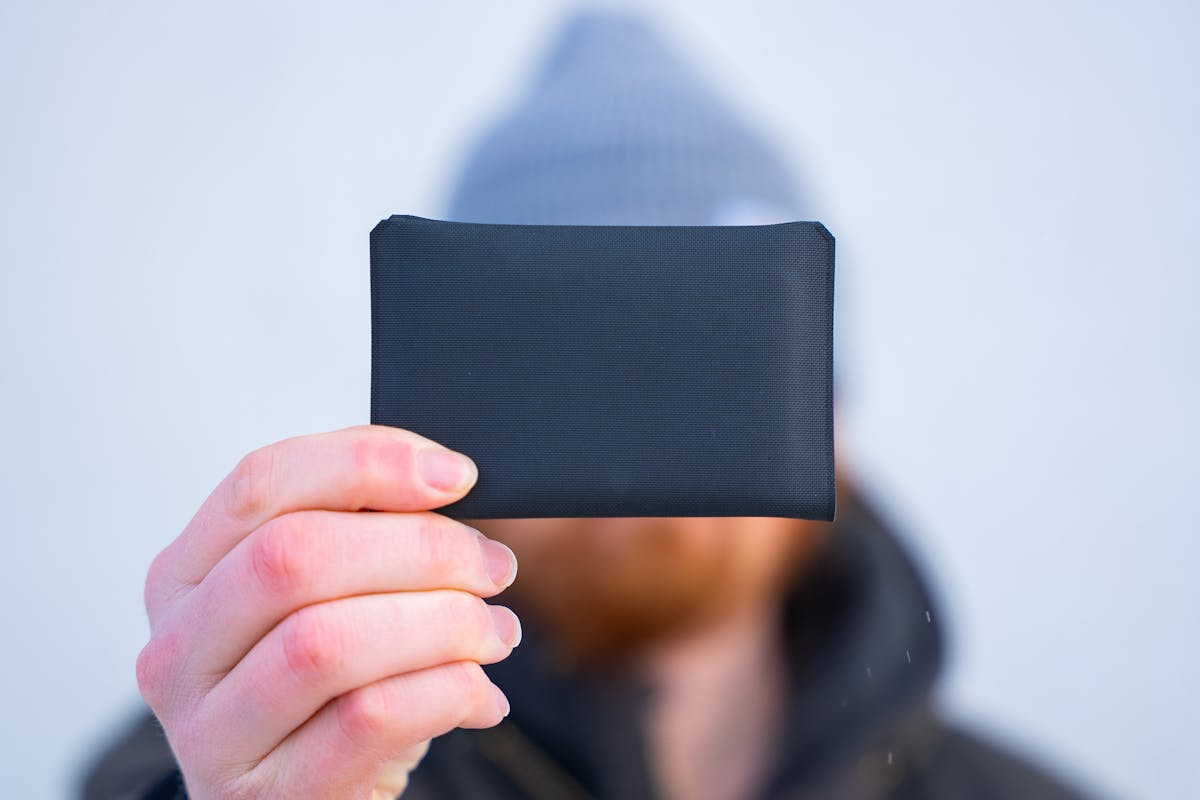
This is not a “dad wallet.” You can’t shove receipts, photos, or stacks of cash into it, and you’re not supposed to. It won’t get dramatically thicker when loaded, and it actively discourages carrying more than the essentials. If that sounds appealing, the Element Card Wallet executes this idea exceptionally well.
Quick Comparison
A close comparison in terms of footprint is the Chums Surfshorts Wallet. Both are compact, pocket-friendly, and easy to stash in a sling or backpack. However, the similarities essentially stop there.
The Surfshorts Wallet can hold significantly more—easily double or even triple the number of cards, plus cash and extras—but it achieves that by expanding outward. When packed out, it gets noticeably bulkier. It’s also far less durable, using lighter ripstop materials that typically last us around three years before needing replacement. One staff writer is currently on their third after about 7 years.
At around $12, the Surfshorts Wallet is undeniably the better value on paper. You could buy roughly 5.5 Surfshorts Wallets for the price of a single $65 Element Card Wallet. Based on our experience, that could translate to approximately 15 years of use.
The question is whether you want to think about replacing your wallet at all. The Element Card Wallet feels like it could realistically last that long on its own. Its materials, construction, and restraint point toward longevity rather than flexibility. But, will you want to use the same wallet for 15 years?
Ultimately, the choice comes down to priorities. If you want maximum capacity at minimal cost, the Chums Surfshorts Wallet is hard to beat. If you want a highly durable, ultra-minimal wallet that enforces discipline and fades into your everyday carry, the EVERGOODS Element Card Wallet delivers exactly that—quietly, efficiently, and without excess. Plus, it has magnets, which is fun. Don’t you want to have fun?
Usage Timeline
Condition: Excellent
- This thing is built like a tank—we’ll put it to the test
- We’re curious if the materials will wear in at all
- No problems getting cards in and out so far
Condition: Excellent
- The wallet looks brand new still
- No issues with the magnets
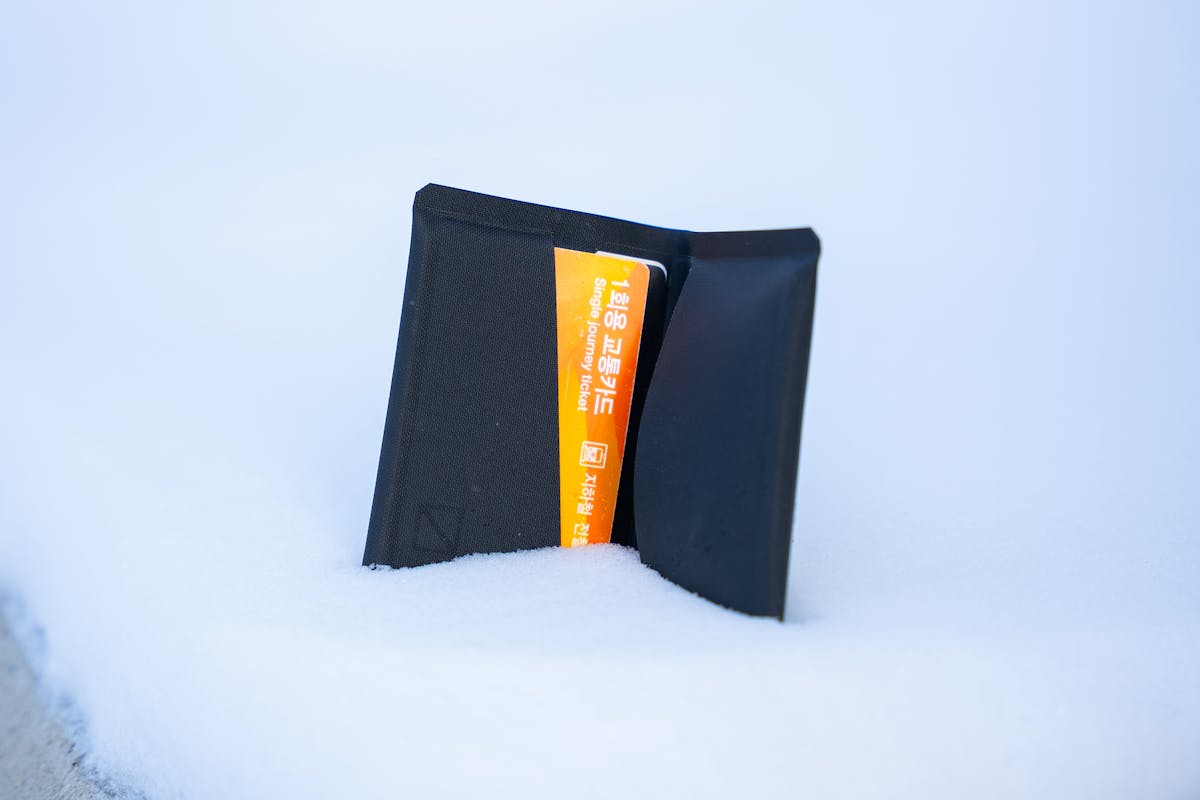
- It can handle water, snow, and ice well




Get your questions about the EVERGOODS ELEMENT Card Wallet answered from our team and the Pro Community right here on the page. Plus, join discussions with other members about gear, guides, and more.
Join Pack Hacker Pro or, Sign In